You’ve probably been to many events with one, but to the common eye, what a sound board does can be pretty ambiguous. This article will shed light on its functionality, components, and importance when handling live event sound.
WHAT IT DOES
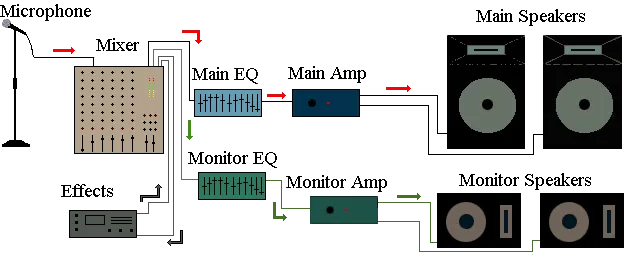
Simply put, a sound board (also known as a mixing board or mixer) takes multiple input signals—such as microphones, instruments, iPods, DJ turntables, etc.—and merges them together so they can be sent to speakers as one signal.
An audio engineer’s job is to ensure each input channel blends harmoniously to produce a well-balanced sound. They use a sound board to optimize the combined sounds by adjusting input levels, applying effects, equalization and dynamic processing.
KEY COMPONENTS
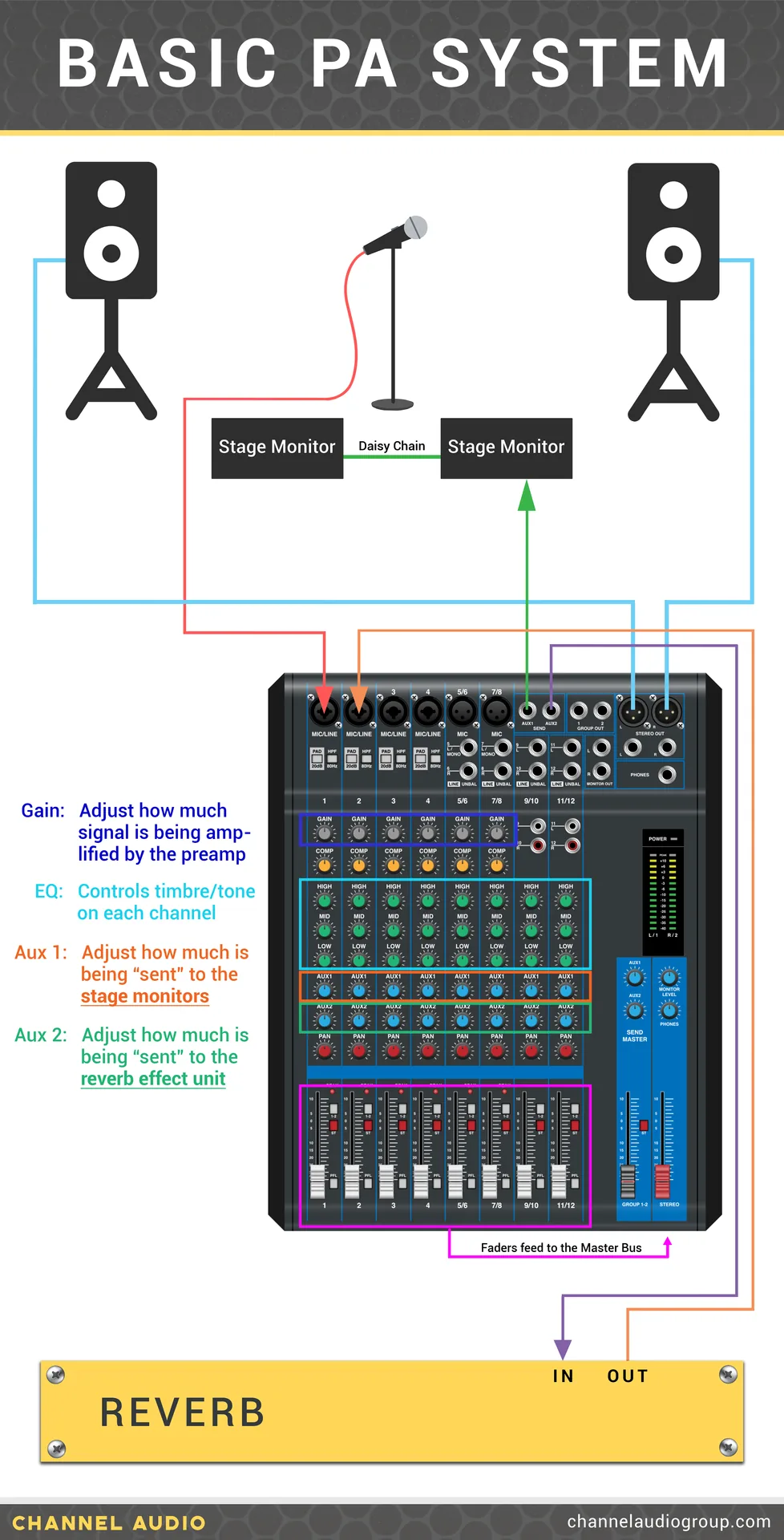
Inputs: These are jacks/plug-ins where all the sound sources plug into. Audio signals typically enter the board through an XLR, 1/4“ TRS, or RCA jack - the most common/standard audio inputs.
Channel EQ’s: Every input sound source corresponds to a channel, and each channel typically has EQ potentiometers. These allow an audio engineer to control the sound source’s frequency balance individually.
Auxiliary Channels: Commonly referred to as “aux channels,” these enable you to send a duplicate feed of a channel/input signal to additional devices. The aux channels output the duplicate feeds via a jack on the top or back of the sound board. The most common use of these is during performances; a band member may want to hear the audio back with certain elements adjusted to their preference through their own dedicated monitor wedge or IEM (in-ear monitors).
Faders: These are the sliders on a sound board that enable an engineer to adjust the volume/presence of each channel within the final output or mix. All channels should start at 0dB (referred to as unity) and be adjusted accordingly from there. This is why an experienced audio engineer running the board is key, as their ears are trained to recognize precisely what is needed to create a quality listening experience.
Here’s a sample sound board configuration into a basic PA system setup.
Hopefully, this article has provided some insight into the function of a sound board and its importance in live audio. The next time you attend an event with a speaker setup—from your cousin’s wedding to your favorite club—you’ll know that the whole production is being run through a sound board.
For a more in-depth look at how to set up a sound board correctly, check out our article How to Correctly Set Up a Soundboard
For the full picture of how a soundboard connects to the rest of the signal chain, our guide on how a basic PA system works explains everything from inputs to speakers.
Let Channel AV Help You Create a Successful Event
Based in Nashville, TN, Channel AV provides superior-quality AV equipment rentals to increase the success of your event. Our expertise combined with 24/7 technical support ensures you have what you need when you need it. To learn more about our services and how we can help you, contact us today at (615) 669-2126 or visit our blog to learn more tips and tricks about audio equipment and event planning!
Frequently Asked Questions
What is the difference between a sound board, mixing board, and mixer? They are all the same thing. “Sound board,” “mixing board,” and “mixer” are used interchangeably to describe the device that combines multiple audio inputs into a single output signal for speakers.
Do I need a sound board for a small event? For any event with multiple audio sources — microphones, a laptop, background music — a mixer is the most reliable way to manage and balance them. Even small events with a single speaker and one microphone benefit from a basic mixer.
Does Channel AV provide an audio engineer with equipment rentals? Yes. Channel AV can provide an on-site technician to operate the sound board and manage your audio for the duration of your event. This is especially useful for events with speeches, live music or complex AV setups.