A hotel AV quote can create friction fast. The numbers may be higher than expected, equipment choices can look fixed and the package may include items that don’t seem connected to the actual program. It’s a common point where planners start asking, “why is hotel AV so expensive?” The answer is often more complicated than the equipment list itself.
Hotel ballroom AV services may include labor rules, access restrictions, house power, exclusivity terms and venue-specific service charges that are easy to miss until the quote arrives.
The better approach is to work backward from the room and the program. A ballroom that looks straightforward on a floor plan may have low ceilings, poor sightlines, limited power near the stage or a long push from the loading dock. Those details affect the equipment package long before you select a projector, speaker or microphone.
Working backwards results in a more straightforward plan with fewer surprises and equipment that actually fits the space rather than a generic ballroom package.
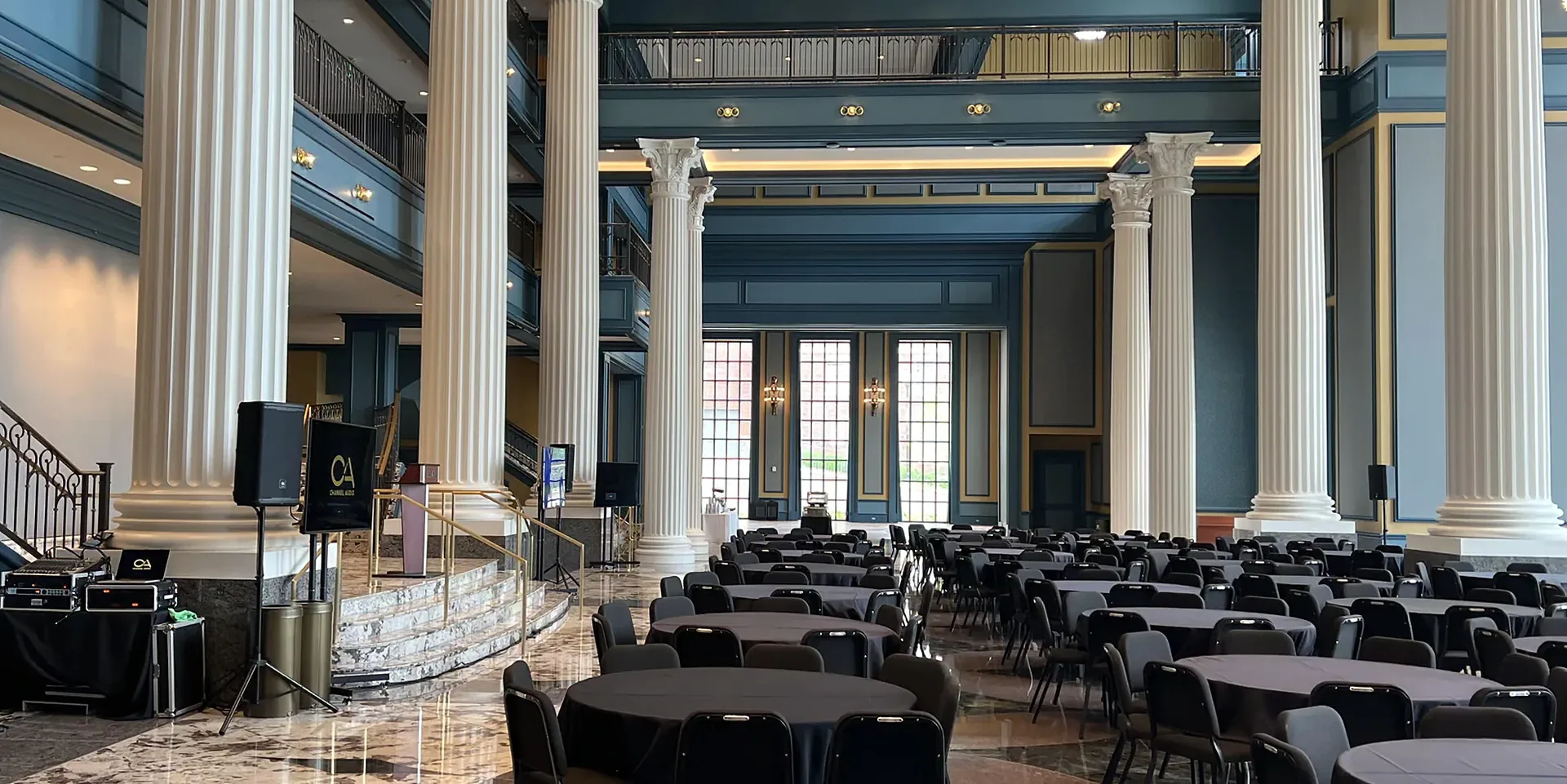
How Hotel Ballroom Layout Affects Your AV Setup
The hotel ballroom itself should be the starting point for any hotel event AV setup. Dimensions, ceiling height, seating layout and stage position determine what the system needs to do.
If the planner is still weighing whether to use hotel-provided AV or bring in an outside vendor, that decision is worth working through first. This guide to understanding hotel in-house AV services covers that question in more detail. Once the vendor approach is settled, the AV setup for hotel events should follow the physical room.
- Room depth matters because the farthest attendee still needs to read the screen and hear speech clearly.
- Width is vital because a single pair of speakers or one centered screen may leave poor coverage at the edges.
- Columns, air walls and L-shaped layouts can create blocked sightlines that aren’t obvious from the hotel’s capacity chart.
Additionally, the stage, podium, head table and control position need to be placed before you make final equipment choices. For example, a projector that works from one position may be in the middle of an aisle from another, and a speaker position that looks clean on paper may fire directly into a reflective wall.
The room leads. The equipment follows.
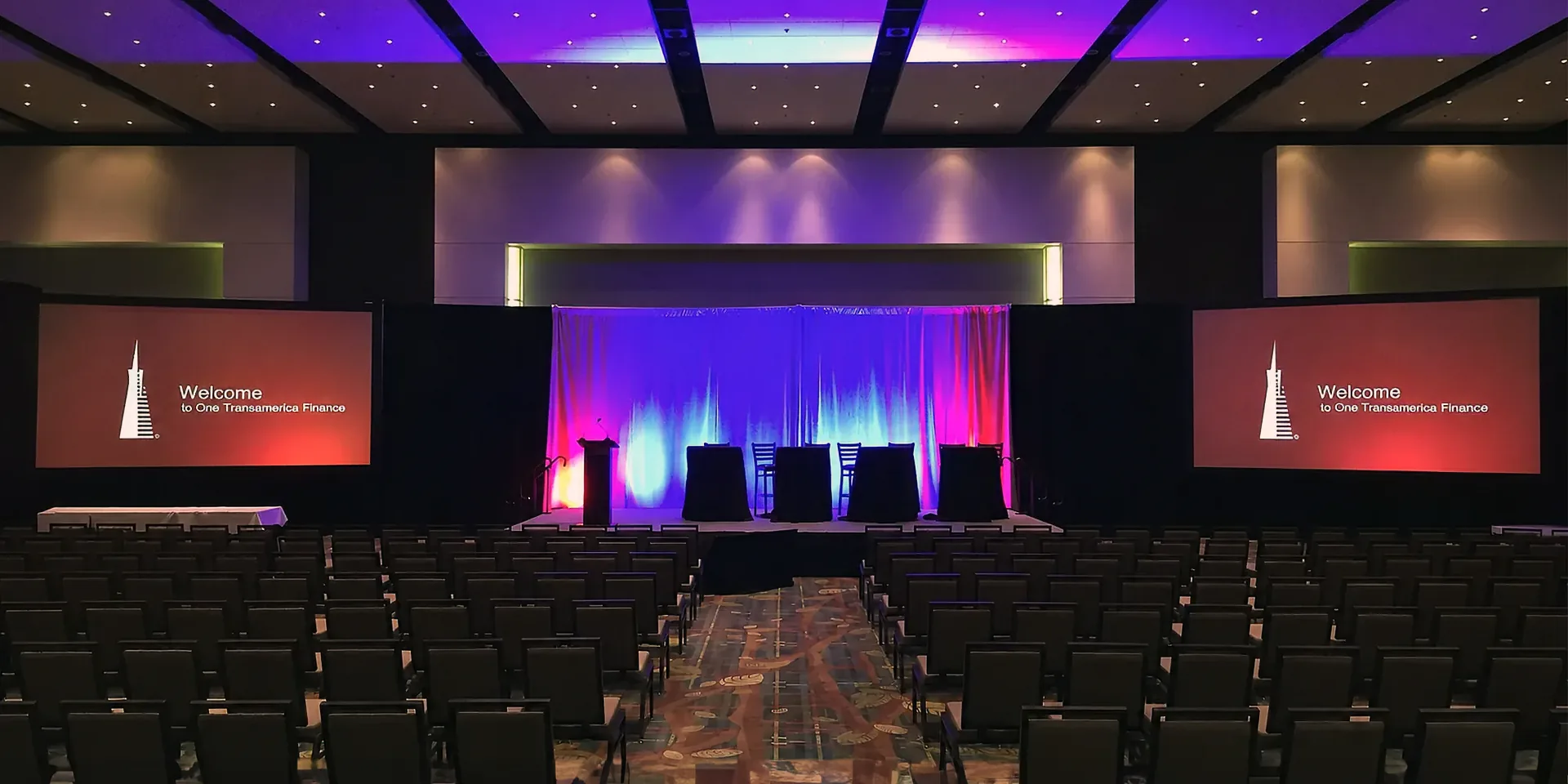
What Are Screen and Display Options for Hotel Ballrooms?
Ballroom screen size should be based on how far the audience is sitting from the display and how detailed the content will be. For instance, a presentation with large headlines and simple graphics feels easier to read from the back of the room than one filled with spreadsheets, financial tables, maps or detailed charts.
AVIXA’s display-sizing guidance also considers the size of the smallest important content element when determining whether an image will be visible enough for the audience to see clearly. In practice, bigger rooms and more detailed presentations usually require a bigger image.
And, a 10-foot-high screen can quickly become a ceiling-height issue once you consider the frame, bottom clearance and stage. Front projection preserves room depth behind the screen, while rear projection keeps gear out of the seating area but requires space backstage.
Hotel ballroom projectors also need enough throw distance for the selected image size. Throw distance affects projector placement, not the basic viewing-size calculation. Multiple TVs can make more sense in a wide or shallow ballroom, and repeated displays can improve sightlines where one image can’t be seen cleanly from every seat.
More detail on common formats is available under projector and screen rentals.
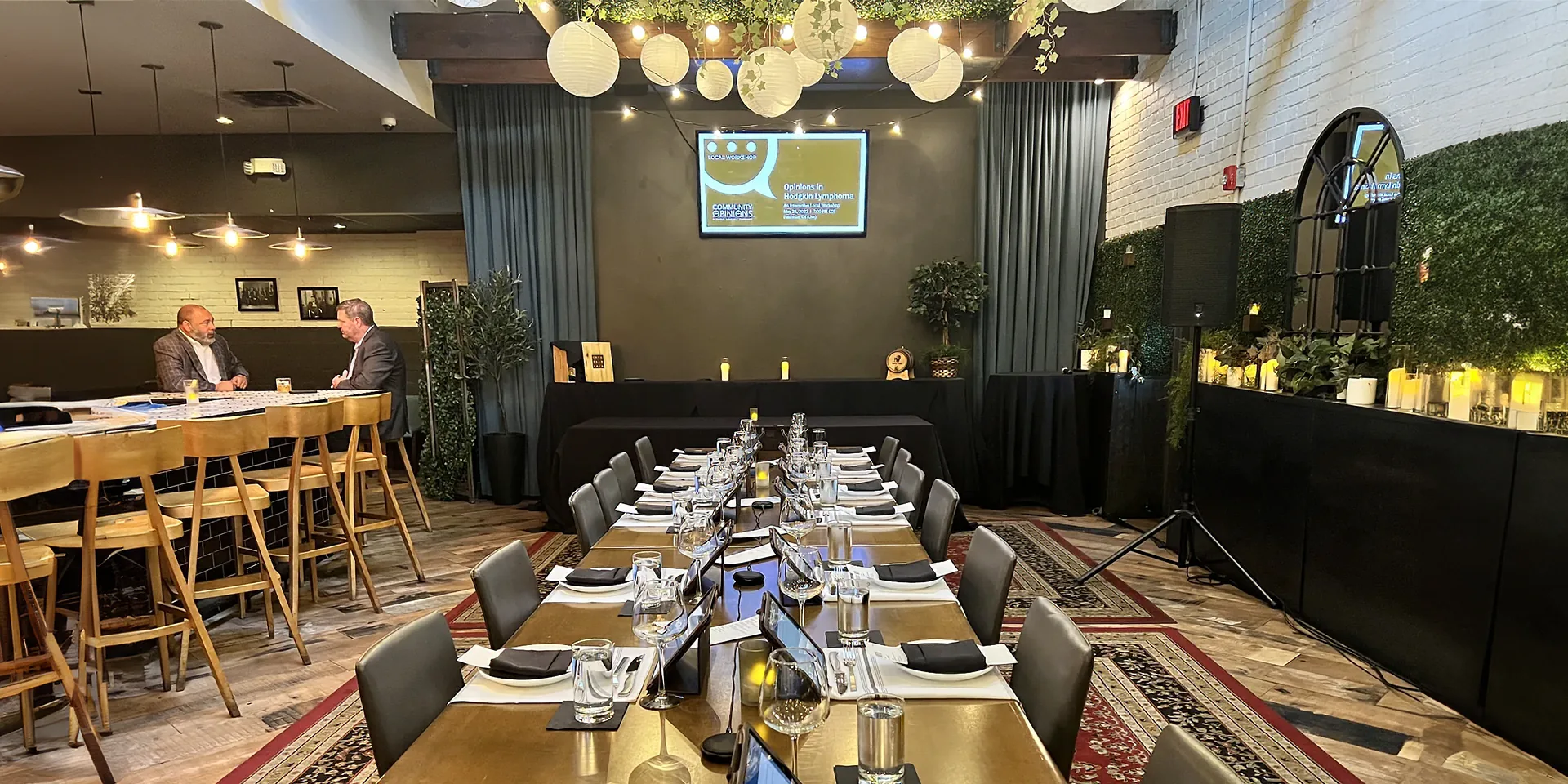
What Is the Best Sound System Setup for Ballrooms?
Larger speakers don’t automatically make speech clearer in a ballroom. A ballroom sound system depends more on coverage, placement, room acoustics and system tuning than raw volume.
Hotel ballrooms often have high ceilings, reflective walls and hard surfaces, which can smear speech as volume rises. Increasing the volume from the main speakers may make the front rows louder without improving clarity for those in the back.
For most hotel meetings, a pair of well-placed powered speakers gives clear, even coverage. Larger, deeper or unusually shaped ballrooms may require additional speakers so guests throughout the room can hear without simply turning the front speakers louder.
Microphone selection should follow the format of the event. For example, podium microphones work well for formal remarks, handheld wireless microphones are useful for audience Q&A and lavalier microphones give presenters freedom to move. Panel discussions and awards programs may use a combination of these options.
The goal isn’t to use more equipment than necessary, but to make sure every speaker can be heard clearly from every part of the room.
See PA systems and wireless microphone rentals for common equipment options.
What Are the Power and Load-In Logistics for Hotel Ballrooms?
A 20A wall circuit isn’t automatically enough for a ballroom AV system. The planner needs to know what else is on that circuit, whether it’s dedicated and where the receptacle is located.
Standard 120V, 20A branch circuits shouldn’t be treated as 20 amps of guaranteed continuous AV capacity. Electrical code rules generally size circuits for continuous loads at 125% of the continuous load unless listed equipment qualifies for an exception. The practical point is that the AV provider should calculate the load and the venue should confirm the available circuits.
Shared circuits can become an issue when catering, house lighting or décor power is connected to the same branch. Larger productions may need dedicated circuits, a venue power drop or proper temporary distribution.
Additionally, access can affect hotel AV cost. Confirm loading dock access, freight elevator rules, the push distance to the ballroom and the approved load-in window. Some venues require house labor or union labor for certain work. Hotel in-house AV fees may also apply to power, rigging, internet or outside-vendor access.
Exclusivity clauses matter too. Resolve those questions before the event contract and AV plan are finalized.
What to Confirm With the Hotel Before Finalizing AV
What do experienced planners ask a hotel coordinator before signing off on the AV plan? They ask for exact room information and operating rules, not just a capacity sheet.
- Room dimensions and ceiling height should match the planned setup.
- Your planner should know where usable power is located and whether dedicated circuits or production power are available near the stage and display locations.
- When is the load-in window?
- Where is the dock access, freight elevator availability, any service-hall restrictions and the actual push distance to the ballroom?
The hotel should also confirm its outside-AV policy in writing. If overhead hanging is being considered, the planner needs to know whether approved rigging points exist and who is permitted to use them. House lighting control access should be discussed before show day if the program depends on dimming.
Internet deserves the same treatment. A hybrid session, livestream or remote presenter may need a wired connection or reserved bandwidth rather than guest Wi-Fi. Hotel event AV planning becomes much easier once you know these hotel details.
Hotel AV consultants can help on unusually complicated programs, but most events simply need the planner, venue and AV provider working from the same verified room information.
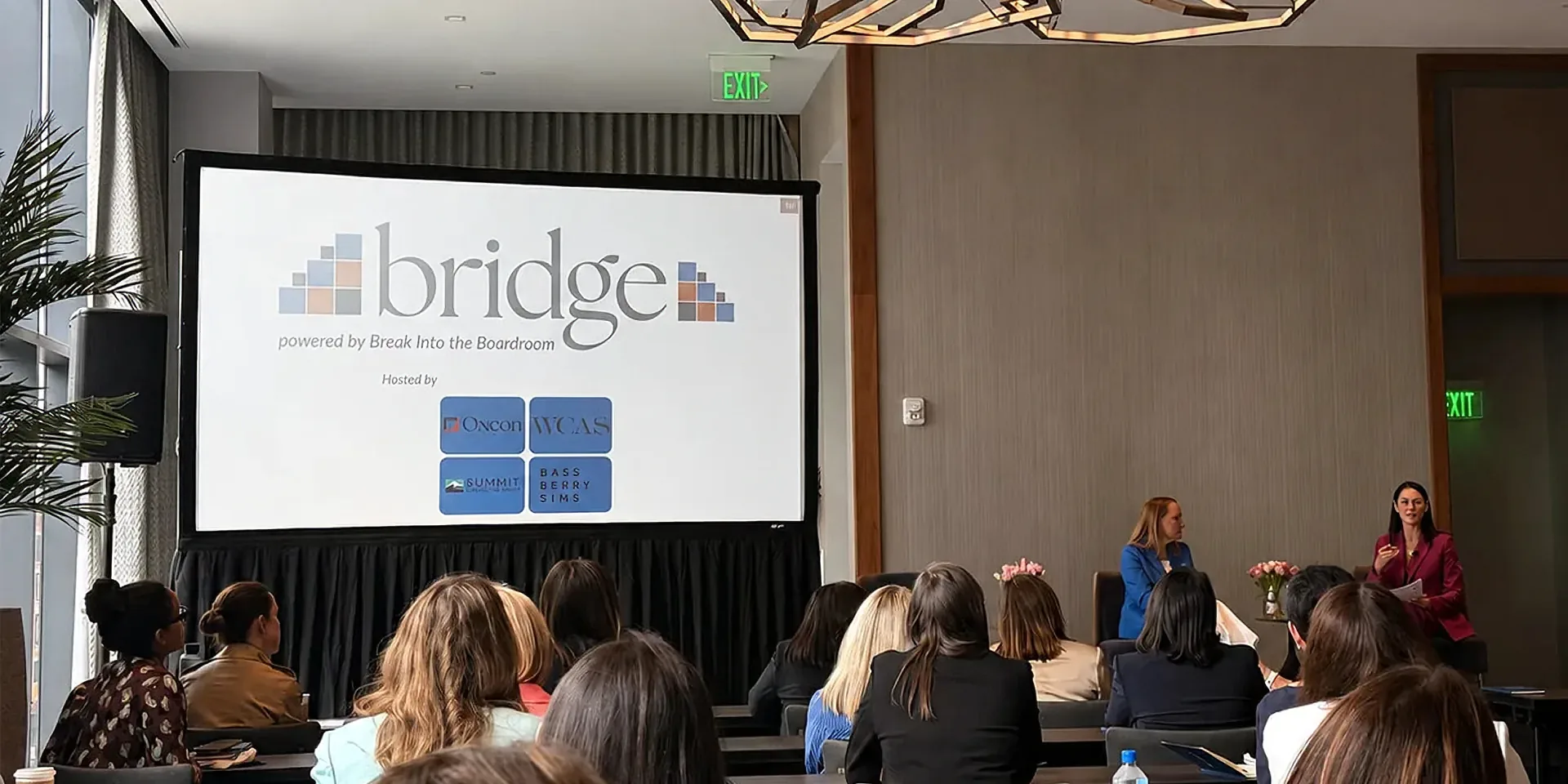
When an Outside AV Company Makes Sense for Your Hotel Event
A simple meeting with a podium microphone and a screen may be handled perfectly well by hotel in-house AV. The added flexibility of an outside hotel AV company becomes more useful as the program adds complexity. For Nashville-area hotel events, outside AV vendors are generally permitted with advance notice. Confirm the hotel’s outside-vendor policy in writing before signing your contract.
Multiple wireless microphones, presentation slides, hybrid attendees, video playback, live recording or distributed displays create more places where equipment choices and labor planning need to work together.
An outside provider may also offer more flexibility in how the package is built when a hotel’s standard offerings include gear the event does not need. The decision should come down to scope, venue rules and the amount of technical coordination required.
For programs that resemble a full meeting production rather than a basic room setup, reviewing options for conference and corporate AV rental can help clarify what belongs in the final system.
Find Hotel Ballroom AV Near Nashville, TN
Channel AV provides professional hotel ballroom AV services for corporate meetings, conferences, presentations and special events throughout the Nashville area. If you’re planning an event in a hotel ballroom and considering an independent AV provider, we’ll take the time to understand the room layout, presentation needs, audience size and event logistics before recommending equipment or building a quote.
Our goal is to create an AV setup that fits the space and supports the event without adding equipment you don’t need. Contact Channel AV to discuss your event and request a custom hotel ballroom AV quote.
Frequently Asked Questions About Hotel Ballroom AV
Can I bring my own AV company to a hotel event? Most hotels allow outside AV vendors, but some have exclusivity agreements that restrict it or charge an access fee. Confirm the hotel’s outside-vendor policy in writing before finalizing your AV plan.
Why is hotel AV so expensive? Hotel AV pricing typically bundles labor rules, venue service charges and power access fees into the quote alongside equipment. The gear itself is often a smaller part of the total than the access and labor costs built into the package.
What size projector do I need for a hotel ballroom? Brightness scales with screen size. A 10-foot-wide screen in a moderately lit room needs roughly 6,000 to 8,000 lumens. Larger screens or high ambient light need more.
How far back can guests sit and still read a ballroom screen clearly? The outer limit for general presentations is 8 times the screen height. For a 10-foot screen, that’s about 80 feet. Detailed content like spreadsheets cuts that limit to 4 to 6 times.
Do I need a dedicated power circuit for hotel ballroom AV? It depends on system size. A small setup may run on a standard circuit, but larger productions or rooms where catering and lighting share the same branch often need dedicated circuits. Confirm available power with the hotel before the AV package is finalized, not on show day.